
Finding Santa Fe Resident Records
Start with what you actually know. An exact address belongs in the County Parcel Property Map Search. A name fits the assessor's owner field. A date pulled from an old newspaper or directory belongs with the historical collections instead. None of these behaves like a general people list. A parcel account shows an ownership connection. A recorded document names parties to a transaction. A directory preserves only what a publisher printed in one period.
Keep the parcel's physical situs address separate from the owner's mailing address when the question is where someone lives now. For a past household, save the volume year and the spelling exactly as printed. A name match grows stronger once a second official record repeats the same address, legal description, case number, or dated event.
- Enter an address in the county parcel map and retain the UPC, parcel number, legal description, and both address fields.
- Use the owner or recording reference in ClerkTrackWeb to locate a recorded instrument.
- Compare the exact name with court, business, or licensed-record information only when it fits the question.
- For an earlier household, pull the matching directory year and pair it with a newspaper, census, or map.
- When a portal stops, use the custodian's counter, email request, library, archive, or a narrow IPRA request for an existing record.
Note: A missing web result can stem from access limits, a spelling difference, or an older record series that has never been indexed online.
Santa Fe Resident Records Offices
Santa Fe is the county seat. Several custodians share the city but not its records. The County Clerk records land instruments and marriage documents. The Assessor carries parcel and assessment context. Elections, courts, city files, and vital records each run under their own rules, so a request succeeds when it names the office that actually holds the item.
Santa Fe County Elections
240 Grant Ave.
Santa Fe, NM 87501
(505) 986-6280
The Clerk's local office confirms three roles. Recording, marriage licenses, and elections all sit under one roof. The County Clerk information page helps when a record needs a counter or phone route. It points there rather than to a portal.
The County Clerk's public-access guidance sets out online, counter, email, and staff-research paths. All of these reach recorded documents.
The County Clerk holds recorded real-estate documents and marriage records on file. Neither amounts to a list of who occupies a home today.
Santa Fe Parcel Searches by Address
The county parcel viewer is the most direct government entry point for a Santa Fe address. Its documented searches run four ways. Choose UPC, address, owner, or parcel ID. Owners go in last-name-first order. One result can return the situs address, owner and mailing fields, recording number, book or page, legal text, tax district, and assessment context. The UPC is the county's 18-number property identifier. That number outperforms a street address when a lot has changed or one street name resembles another.
| County parcel search | Input | What it can anchor |
|---|---|---|
| Search UPC | Exact 18-number identifier | One specific county account |
| Search Address | Physical situs address | Parcel and account context |
| Search Owner | Last name, first name | Owner-associated accounts |
| Search Parcel ID | County parcel number | Property-account placement |
A parcel map is reference material. It cannot replace a deed or plat. Nor does it prove who shares a home, and the full address-to-document chain sits on the Santa Fe street directory page.
- Parcel
- A defined piece of land tracked by the county for property-account purposes.
- Situs address
- The physical location of a parcel, which can differ from where tax mail is sent.
- UPC
- The Assessor's 18-number property identifier, built from mapped property components.
- Legal description
- The recorded land description that distinguishes a property beyond a street address.
The parcel-viewer link changed in February 2026. Use Santa Fe County Assessor tools instead as the safer entry point.
Santa Fe Deed Access Paths
ClerkTrackWeb splits index use from purchase access. INDEX credentials open indexing information and an instrument number. PUBLIC credentials support document purchase with a card and valid email. PROBATE has a separately identified path. Free self-service computers also sit in the Clerk's foyer during business hours. After finding an instrument number, a researcher can email the Clerk for a copy and allow the county's stated two-business-day interval.
When a chain of title cannot be completed online, the Clerk offers staff research for an address or chain. The county calls that work unofficial and unguaranteed. The published charge is $40 for the first 15 minutes, then $40 per hour after that. The county reports over 480,000 records digitized since 2021. No verified first year exists for the online index. A blank search is not proof of absence.
The recorded-document access guide shows why the portal, foyer computer, email route, and staff search are distinct tools for a Santa Fe records search.
Pair a grantor or grantee name with the legal description, book and page, or instrument number. Similar party names can otherwise merge unrelated properties.
Santa Fe Residents in Current Records
No single government roll lists every Santa Fe household. Current official sources each capture a different relationship to a place or activity. A parcel account ties an owner to land. A recorded instrument names parties to a document. A court result confirms case context, not an address. NMVote lets a voter view that voter's own election information, while a full voter-data request is a separate regulated process requiring written authorization and use limits.
| Santa Fe source | What it confirms | Custodian | Access path |
|---|---|---|---|
| County parcel account | Owner, situs and mailing fields, property context | County Assessor | Public parcel viewer |
| Recorded instrument | Grantor, grantee, document placement | County Clerk | Portal, foyer, email, counter |
| Case information | Party name, court, number, status | New Mexico Courts | Case Lookup and clerk |
| Voter information | A voter's own registration or authorized product | Secretary of State | NMVote or signed SERVIS request |
| Business filing | Public entity or registered-agent role | Secretary of State | Business Services portal |
These sources can corroborate one another. They should not be combined into a claim of current residence without an exact, dated connection.
Santa Fe Court Name Checks
New Mexico Case Lookup opens general public case information for courts statewide. It includes Santa Fe District Court. A case number there weaves together pieces worth decoding. It can carry county code 101, a category code, and a filing sequence. Before matching any result to a parcel or deed, confirm the party spelling. Court type, category, and date deserve the same check. That discipline keeps a Santa Fe records search honest. It keeps two same-name people from collapsing into one file.
Basic Case Lookup has real walls. It shows no documents and no personal address information. Juvenile criminal cases filed after July 1, 2007 stay sealed from it. Family Violence Protection Act order-of-protection cases after July 1, 2008 do too. For documents, re:SearchNM is the judiciary's registered route, with tiered access to case content. A First Judicial District copy request travels the court's records path. The clerk prices physical copies at $0.35 per page plus applicable charges. Santa Fe Municipal Court runs its own FullCourt portal. It cautions that recent entries may lag behind the paper file. First Judicial District Court serves Santa Fe, Los Alamos, and Rio Arriba Counties.
A court entry can help separate two people who share a name. It is not a public address directory. Protected case categories exist for a reason. A lookup should never be used to slip past them.
Note: The court clerk can locate a case by party name. An exact case number makes a copy request far more efficient.
Santa Fe Voter Data Has Limits
NMVote and SERVIS solve different problems for Santa Fe voters. NMVote walks an individual through that person's own registration and election information. It also covers ballot status, a clerk finder, and an address-based voting location. Its street-number-and-ZIP feature answers with a polling place, not with people tied to the street. SERVIS works differently. It is a signed voter-data request. Its form wants a jurisdiction, data choices, output format, requester identity, signature, and intended use.
State law shapes that process. NMSA 1978 § 1-4-5.5 demands a written request. It also requires an affidavit confining use of voter data to governmental or election-campaign purposes. Some elements stay out of reach entirely. The statute bars Social Security numbers. Day and month of birth, opted-out telephone numbers, and specified current ballot information are barred too. Safe at Home participants sit in a secured module apart from the ordinary voter file. NMVote remains the personal registration route; authorized list requests go through the separate SERVIS process.
Santa Fe Vital Record Routes
Certified birth and death records for Santa Fe events come from New Mexico Department of Health Vital Records and Health Statistics. Access is tight before the statutory opening period. A birth or death certificate is not a name-search tool during that window. The Department limits release to the registrant, immediate family, or someone with tangible proof of legal interest. Birth records open to the public after 100 years. Under NMSA 1978 § 24-14-27, death, marriage, and divorce records open after 50 years, subject to the proper custodian and other court limits.
The County Clerk records marriage material, and the clerk's guide offers husband name, wife name, and marriage-date-range fields. Divorce records live with First Judicial District Court. For older family work, other tools build a dated lead first. Directories, newspapers, cemetery material, probate, deeds, and census records can each pinpoint a person and date before anyone requests an eligible certificate. NMDOH Vital Records is the statewide certified-record source.
The Santa Fe Bureau of Vital Records and Health Statistics handles death certificates in person. Mail and public-health-office options depend on the record type.
Santa Fe Privacy Protections
Privacy limits in New Mexico are real and enforced. Safe at Home gives qualifying survivors a stand-in address plus mail forwarding, and voter registrations belonging to participants sit in a secured system. Court search results leave out address details and sensitive case types. County Clerks also must redact, on certain recorded-document images, a birth month and day, all but the last four digits of a Social Security number, and all but the last four digits of a driver-license number, per NMSA 1978 § 14-8-9.1.
Treat these limits as safety features rather than obstacles. When a record is wrong, name the exact parcel, instrument, court case, filing, or city record, then ask the custodian of that record about fixing or redacting it. One correction at one agency does not ripple outward on its own, so older indexes may still carry the outdated entry.
New Mexico Safe at Home explains the substitute-address program and its confidentiality purpose.
A safety-related public registry carries its own scope and terms. It does not establish a person's current home or any court disposition.
Santa Fe Residents in Historic Directories
Santa Fe's deepest city-directory shelf sits at the Fray Angélico Chávez History Library. Its serial list places Santa Fe City Directory volumes from 1928 through 1999 in the reading room. The Santa Fe Cross Reference Directory appears separately for 1995 and 1997. The standard volumes organize by name and business. The later cross-reference books flip that order for address-first searching. Volume coverage, reading-room limits, and year-by-year checks get full treatment in the Santa Fe directory book.
Hudspeth came first among local publishers, and Polk followed. Gaps remain despite the catalog's long span. A Historic Santa Fe Foundation account traces a sequence ending in the 1980s. Neither that nor the 1928-1999 serial record proves every annual volume survived. Confirm the exact year with library staff. A printed directory can yield an address, business, spouse, or telephone detail as published. Still, it captures one period moment, not proof of ownership or a full household roster.
Santa Fe Public Library research resources include genealogy support. The Chávez Library holds the local serial-list lead.
Santa Fe Names Across Record Eras
Research in Santa Fe spans four governments: Spanish, Mexican, territorial, and statehood. A name may appear with a diacritic one place and without it the next. It may gain a middle name or trade one surname form for another. Record the spelling exactly as the document gives it. Then, where the portal allows, retry a documented variation. The Chávez obituary database tells searchers to ignore diacritics. That habit works well for most historical Santa Fe names.
Directories only help once they exist. For someone earlier, turn to newspapers, Sanborn maps, deeds, probate files, church microfilm, or a State Archives series. The 1890 federal schedules were destroyed. Released census material now reaches 1950. Each source proves a different date and a different relationship. A careful family-history trail layers them rather than trusting a single name match.
Santa Fe Public Library services covers the Main Library's free Santa Fe New Mexican microfilm reader. It also includes public computers, scanning, and interlibrary loan.
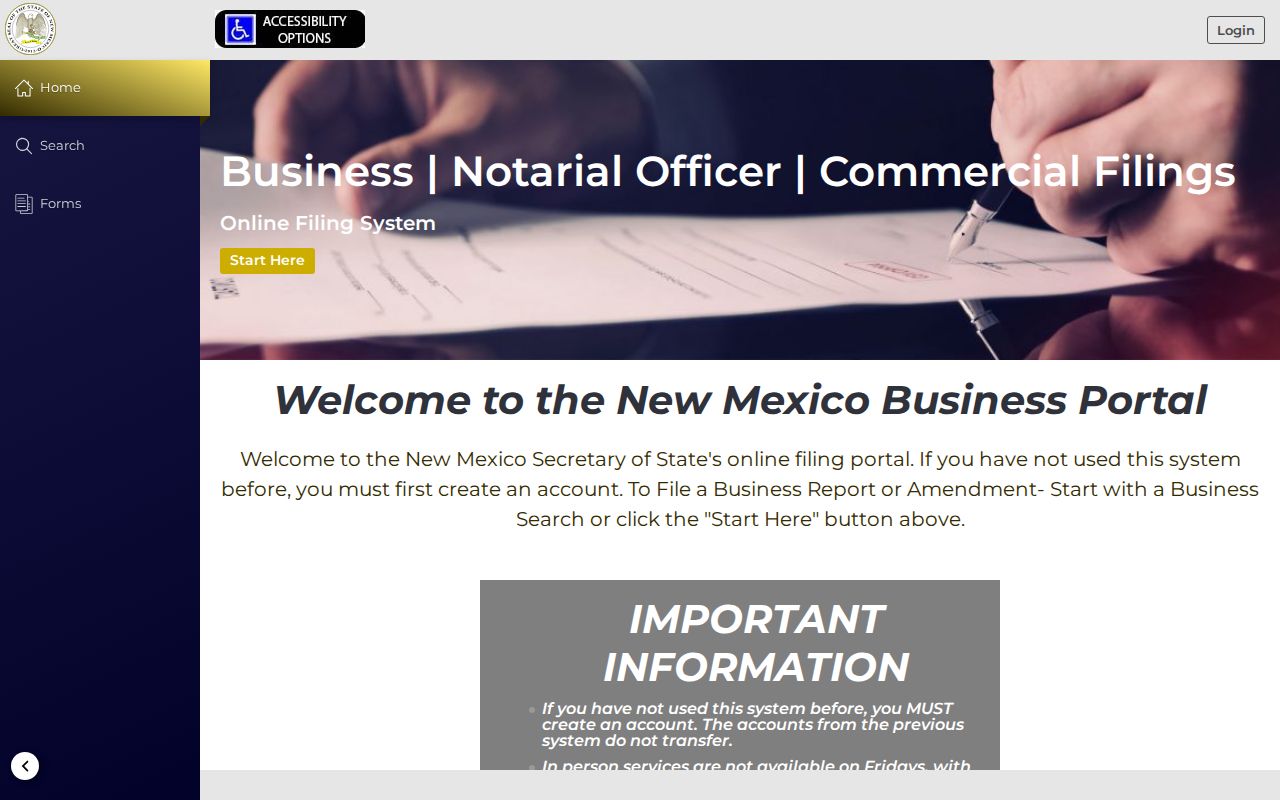
A business filing may link a person to a role or entity. It still does not prove where that person lives.
Santa Fe Archive Access by Era
Records in Santa Fe shift by era. State Archives holds county records for 1850 through 1912 and state-government records from 1621 forward. The Pueblo Revolt of 1680 destroyed nearly all Spanish documents in New Mexico. That early gap is real. So treat it as a boundary rather than a puzzle to force together. Land-record microfilm, court and probate series, and church records can fill space. A modern county portal cannot do that.
The city-directory era begins in 1928. Sanborn editions from 1886, 1902, and 1921 give building and street context. They never name an occupant, though. The County's digitization work is substantial. Still, today's online access is one thing and the historical shelf another. Match the date to the right counter, archive, library, or portal.
New Mexico's IPRA guidance lays out the written-request framework. It applies when an agency holds an accessible record but offers no useful public search screen.
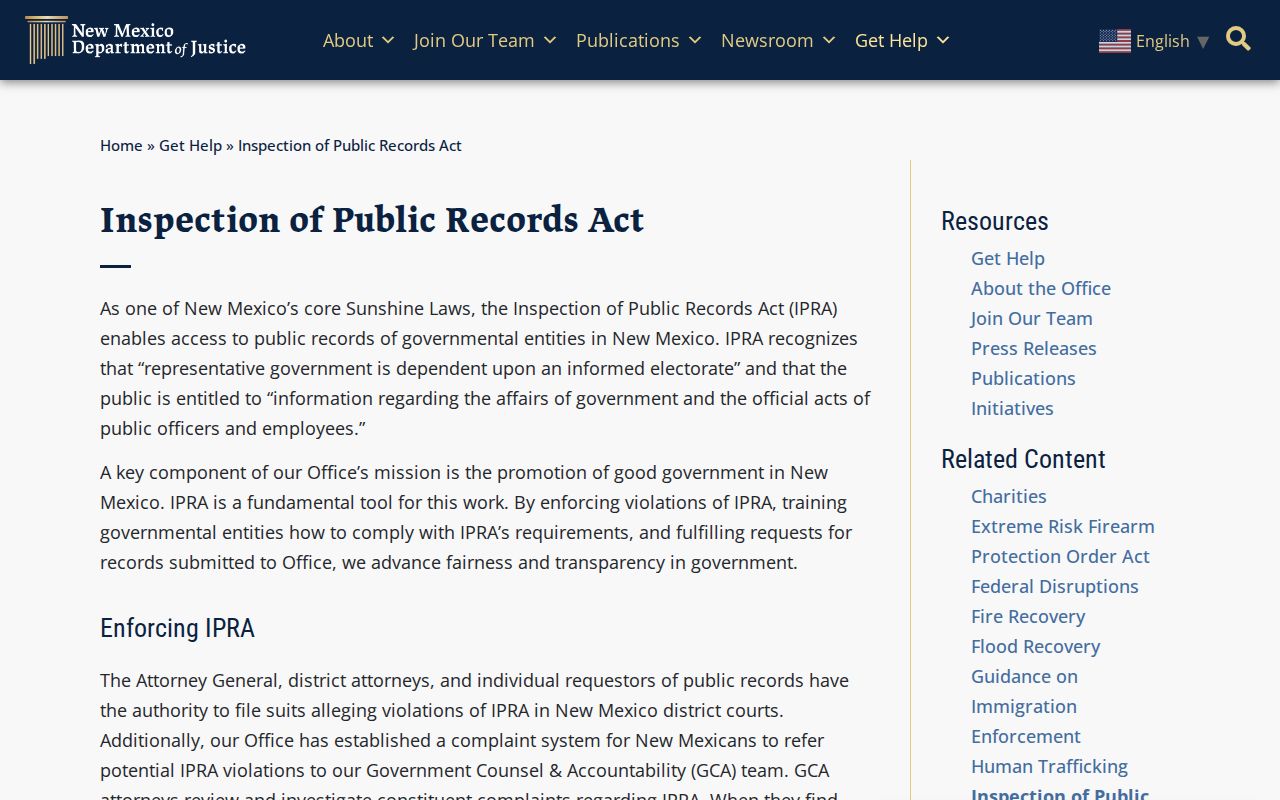
Keep any request narrow: name the record type, the date range, the agency, and any parcel, instrument, or case reference already in hand.
Note: IPRA does not force an agency to build a new list, and it does not override vital-record, court, or specialized-record restrictions.
Santa Fe Official Checks for Scams
A suspect letter or call can be tested against official records. That does not hand the sender anything new. A deed-related solicitation can be checked through the Clerk's instrument or copy route. An unclaimed-property notice should be tested in the free state claim search. A caller claiming to speak for a court deserves a callback number. Find that number on your own. These are record-verification tasks, not identity profiles.
New Mexico Unclaimed Property offers a name search for an owner, family member, or business. The rightful owner or heir must validate the claim.
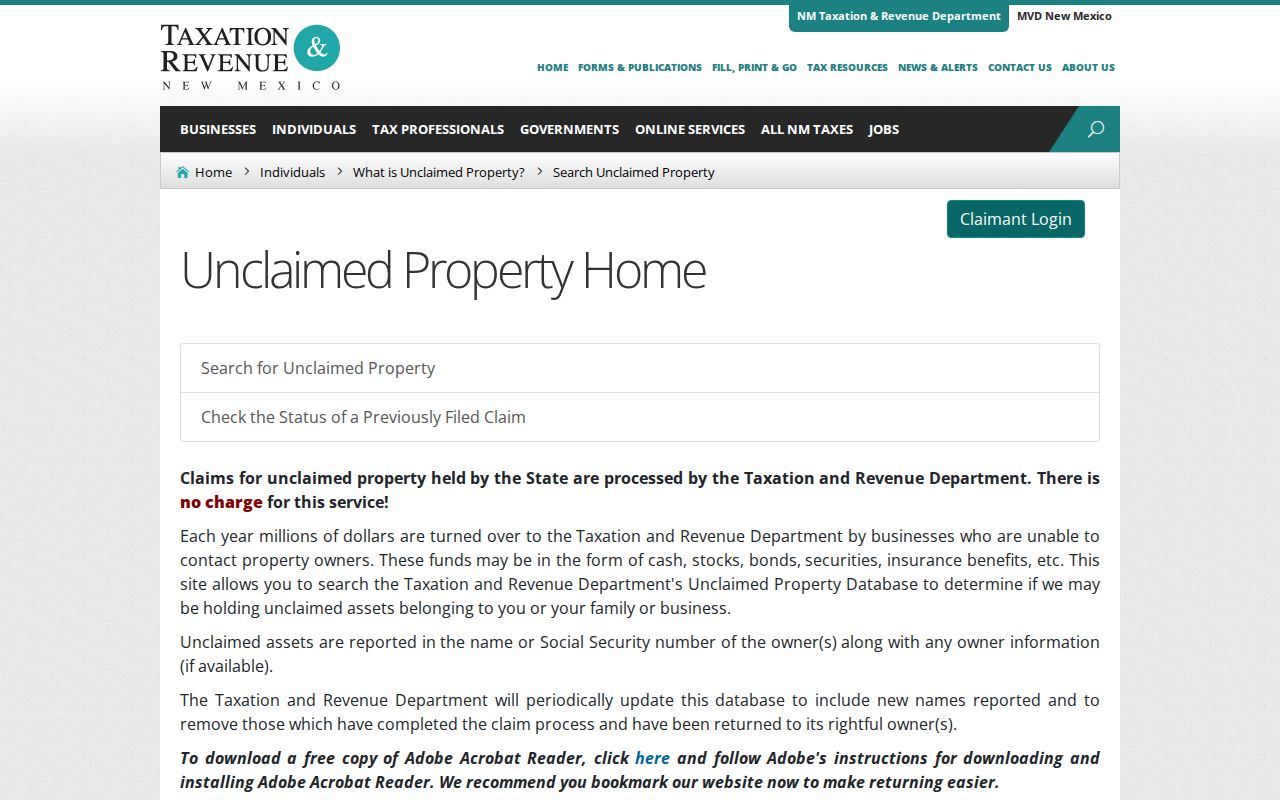
The state warns against paying an unverified caller or sender to recover unclaimed property. Start with the official search instead.