
Santa Fe Resident Records to Compare
A Santa Fe resident lookup has no single master roll. The best starting record depends on the question. The County Assessor can tie an owner to a parcel, but its account fields do not identify every person at that address. A recorded instrument can place named parties in a transaction. A court result can confirm a party name, court, category, and filing context. Each result needs another record with the same spelling, date, place, or property reference before it supports an identity conclusion.
| Record | What it can confirm | Santa Fe custodian | Access route |
|---|---|---|---|
| Parcel account | Owner linked to a parcel, with distinct situs and mailing fields | Santa Fe County Assessor | Parcel Property Map Search |
| Recorded instrument | Grantor, grantee, document placement, and transaction trail | Santa Fe County Clerk | ClerkTrackWeb, foyer computer, email, counter, or staff research |
| Court case | Party spelling, court, category, number, filing context, and status | New Mexico Courts | New Mexico Case Lookup and the court clerk |
| Vital record | Official birth or death fact when the requester is eligible, or after the statutory opening period | NMDOH Vital Records | Vital Records and Health Statistics |
| Historical directory | Published name or address snapshot at a particular time | Fray Angélico Chávez History Library | Reading-room and library research |
Start with the exact name as it appears on the record already in hand. If an address is known, retain the parcel's UPC, legal description, and both address fields. If a court number is known, retain its court code and category. Those details do more work than a shared surname. A public New Mexico license lookup or Secretary of State business filing can also establish a public role or affiliation, but neither establishes a home address. The County Clerk also asks self-researchers to try name variations when an initial search misses.
Santa Fe Court Names and Case Lookup
The public New Mexico Case Lookup is a name-verification layer, not an address directory. It provides general public case information from New Mexico Courts. Court materials describe filters for court type, location, category, year, case number, status, filing date, and date range. An attorney search requires first and last name and may use a CAID number, which is not a Bar number. Check the live help before relying on a case-number format.
The public Case Lookup screen is the official starting interface for a Santa Fe resident lookup involving a court reference.
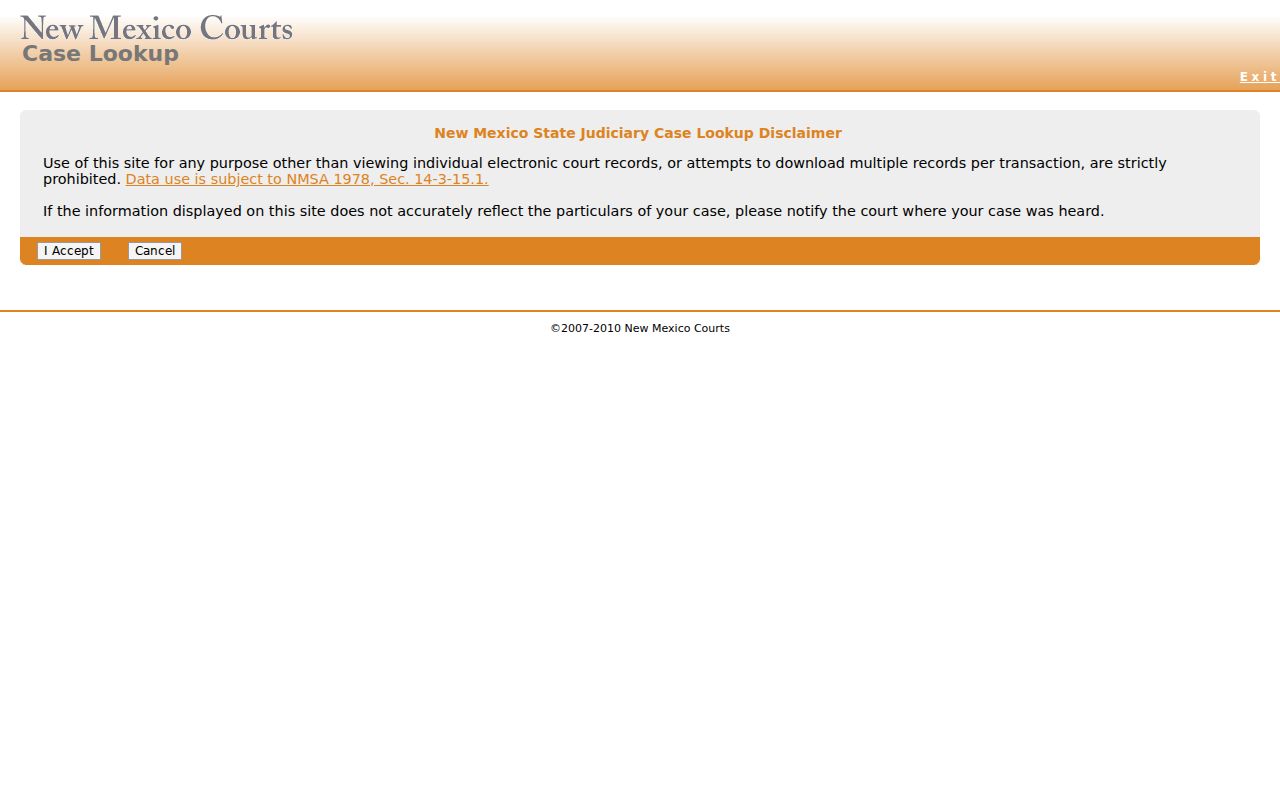
Its value is in careful comparison: save the exact party spelling, case category, court, and date, then compare those details with a separate official record. The basic search does not publish documents, Social Security numbers, or address information. It also excludes specified juvenile and protection-case material, so an absent result should never be treated as proof about a person.
| Case Lookup control | How it helps identify the correct record |
|---|---|
| Court Type and Location | Narrow a search to the proper court setting. The Santa Fe District Court geography code is 101 in the documented example. |
| Case Category and Year | Separate cases with similar party names by the type and time of filing. |
| Case Number | Use an exact number when available. The court's example structure includes court, county, category, year, and sequence pieces. |
| Case Status and Filed Date | Use the optional filters to avoid conflating older or closed matters with a newer one. |
Note: A court entry is one identity marker, so compare it with a parcel, instrument, license, or other record before drawing a conclusion.
Santa Fe Resident Lookup Court Routes
Santa Fe court channels serve different records. The Santa Fe Municipal Court FullCourt portal offers municipal court-record and calendar access, with a warning that recent office entries can lag. It is not the route for all district-court matters. The First Judicial District serves Santa Fe, Los Alamos, and Rio Arriba Counties, while federal proceedings belong in the federal court system rather than New Mexico Case Lookup.
The Municipal Court public portal is useful when the matter belongs to that limited-jurisdiction court.
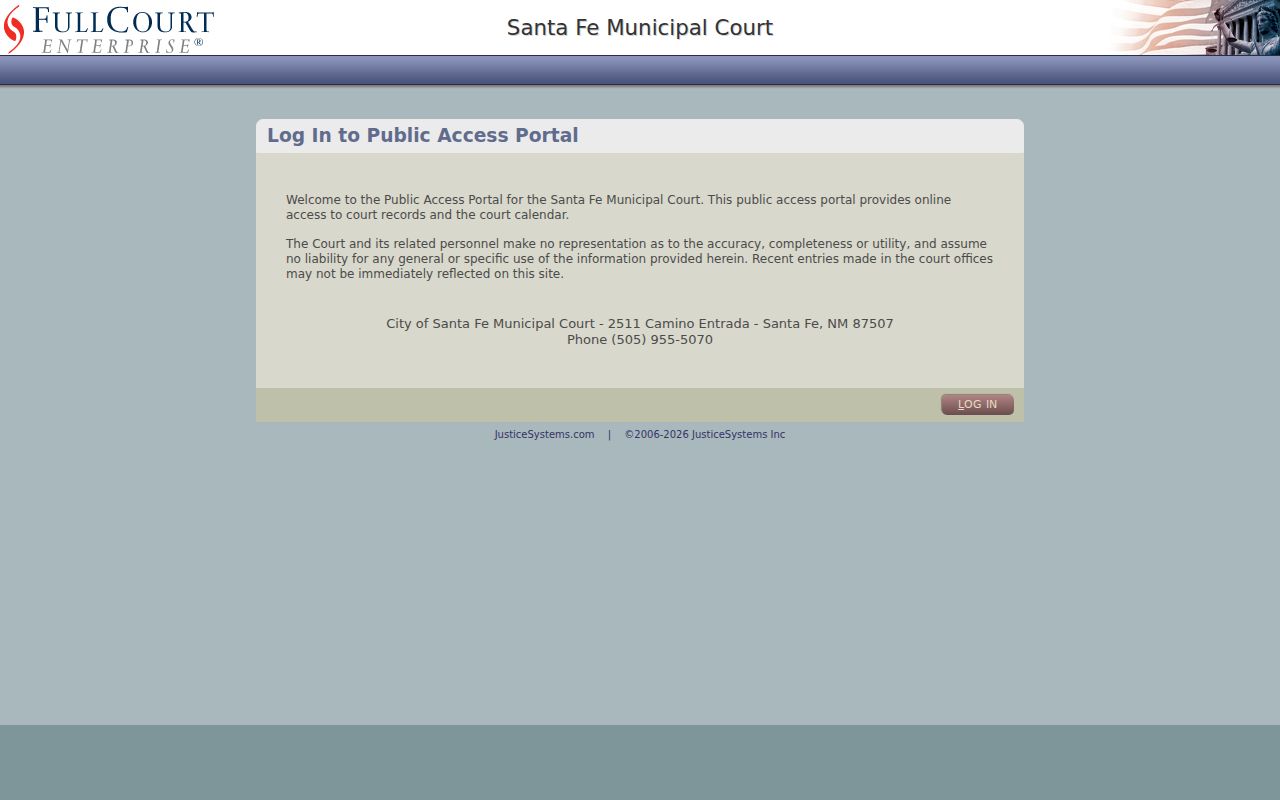
When the case is elsewhere, switch channels instead of assuming an online non-match resolves the question. For a district-court copy, record the case number first and ask the actual clerk about the available public file and any restriction.
re:SearchNM is the registration-based route for Odyssey case information and documents. Access changes by profile and tier, and the Judiciary describes applications and a terms or non-disclosure agreement as part of the process. Registration does not make every document automatically available.
The registered re:SearchNM interface signals that document access is governed by Judiciary rules rather than the basic public result screen.
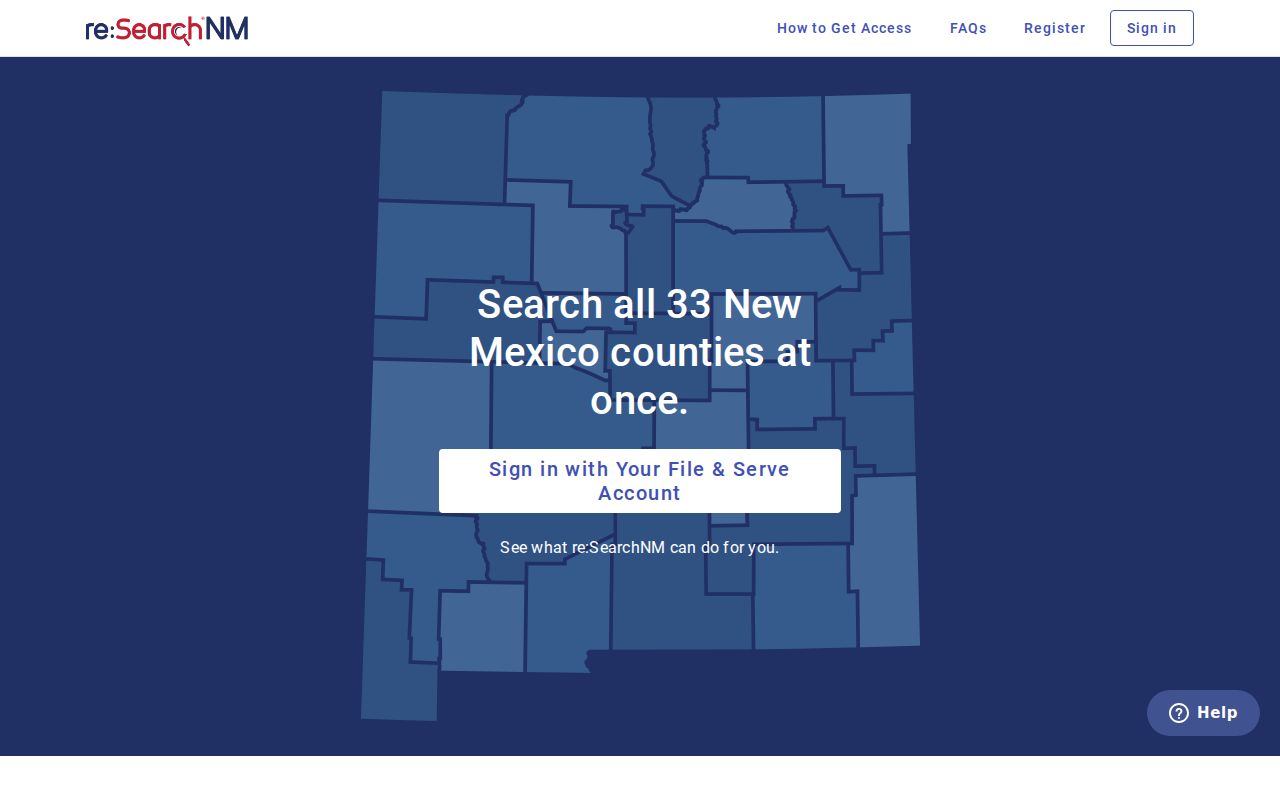
The distinction protects private case material. It also gives a documented fallback when a public result supplies a case reference but not the item needed for lawful research.
Verify a Santa Fe Resident Record Match
Use a resident lookup as a sequence of small checks. Begin with the source that has the most exact detail, then add a different record type. A property account may include a UPC and legal description. A court result may include a county code, category, and date. A marriage, probate, obituary, or historical-directory clue may add a time period. Do not combine people solely because their surnames match.
- Write down the original name spelling, middle initial or middle name, and every date or place already known.
- For a property lead, use the Assessor's owner search in its documented Last, First order and preserve the situs, mailing, UPC, and legal-description fields.
- Compare that name with an instrument, court entry, or official license or business role. Keep the court type, case number, filing date, or recording reference with the search notes.
- Request a copy from the custodian only when the record is needed and the access rules permit it. A narrow New Mexico Inspection of Public Records Act request can identify existing nonconfidential records, but it cannot require an office to create a new resident list.
- Docket
- A court's organized list of filings and events in one case. It helps trace a case number, but it is not a person profile.
- Index and image
- An index points to a record through fields such as a party name, date, or instrument number. An image is the document view and can have separate purchase, access, or redaction rules.
- Certified copy
- A copy issued or certified by the custodian for the record on file. It is different from a screen result or an unofficial research note.
The First Judicial District Clerk's copy information explains that staff may help locate a case by party name, while the exact case number helps. The research record reports physical copies at $0.35 per page plus applicable mailing or storage-device charges.
The First Judicial District Clerk is the right place to ask about a Santa Fe district-court copy after the case has been identified.
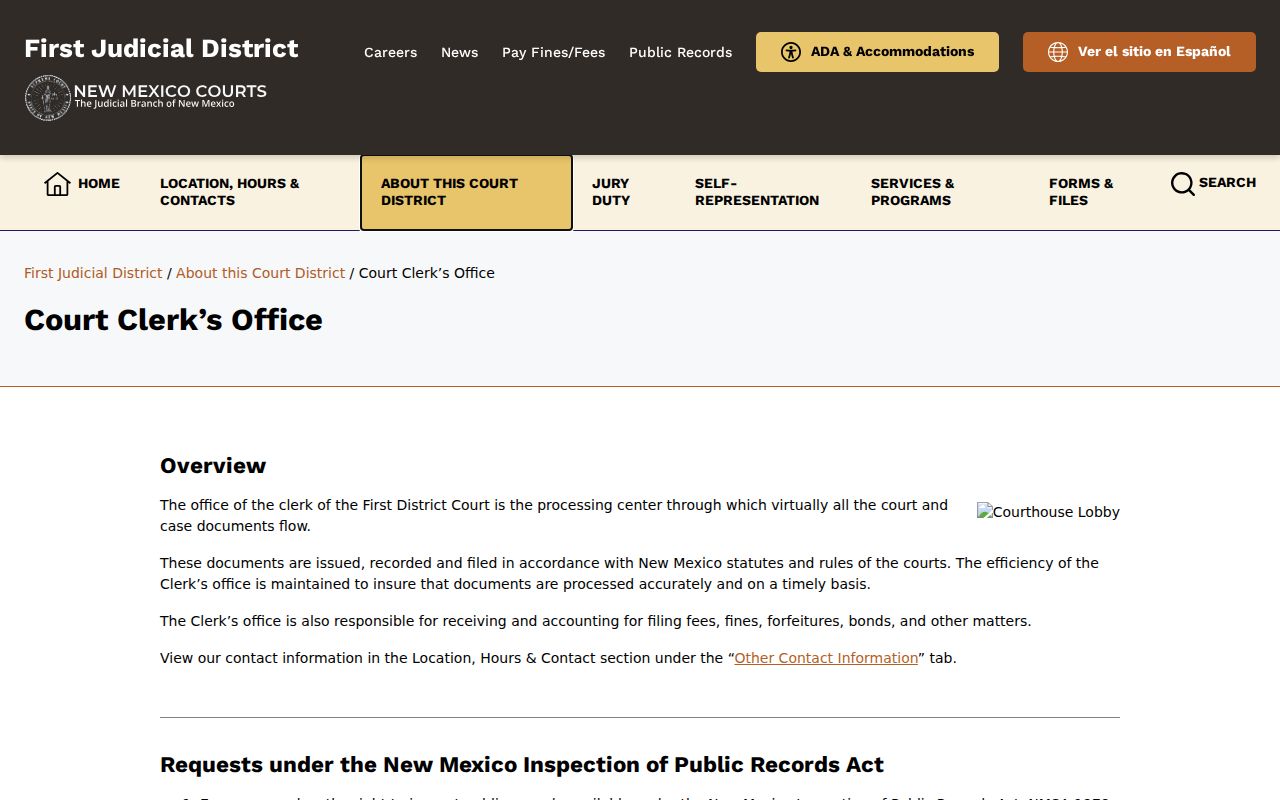
A copy request goes through the Judiciary's records path after selecting the First Judicial District. That preserves the line between a public index entry and the custodian's actual file.
Santa Fe Vital Records for Identity Checks
New Mexico Department of Health Vital Records and Health Statistics issues statewide birth and death records, including Santa Fe events. Birth and death certificates are restricted to the registrant, immediate family, or a person with tangible proof of legal interest before their historical opening. Birth records become public after 100 years. Death, marriage, and divorce records become public after 50 years under NMSA 1978 § 24-14-27, subject to the separate custody and court-file limits that still apply.
The County Clerk does not issue a birth certificate or official death-certificate copy. It handles marriage licenses and has a marriage-name and date search in ClerkTrackWeb. The Clerk can certify a marriage application, while divorce records are held by the First Judicial District Court. These differences matter when a resident lookup reaches an event record. Match the request to the record and custodian rather than sending a broad request.
| Record request | Key Santa Fe access point |
|---|---|
| Birth certificate | NMDOH route, restricted before the 100-year opening; the reported certified search/copy fee is $10 if on file. |
| Death certificate | NMDOH application, restricted before the 50-year opening; the reported certified search/copy fee is $5 if on file. |
| Marriage record | Santa Fe County Clerk and ClerkTrackWeb name/date search; the County reports $5 for a certified copy on its marriage page. |
| Divorce record | First Judicial District Court, using a case or clerk copy route rather than the County Clerk. |
Santa Fe Names Across Court Geography
Santa Fe's court geography is a practical same-name safeguard. The First Judicial District serves three counties, and a district-court number uses a geography code. The research example D-101-CV-9801525 identifies District Court, Santa Fe County code 101, a civil category, and a filing sequence. A result from a different county code should not be silently merged with a Santa Fe property or historical-directory entry.
Spanish and Hispanic name variations add another local check. The Chávez obituary database tells researchers to disregard diacritics. Retain the spelling as indexed, then retry without diacritics and with a surname variation when the official archive or historical index permits it. A spouse or work notation in an older directory can help distinguish a dated entry, but it does not establish a current address. The Santa Fe Directory Book is the appropriate place to examine the dated directory collections in depth.
Santa Fe Resident Lookup Election Limits
NMVote lets a voter view that voter's own registration and election information. Its address route uses a street number and ZIP code to find a voting location. Neither route is a public name directory. The separate statewide SERVIS voter-data process requires a written request, an intended-use description, and the restrictions in NMSA 1978 § 1-4-5.5. The law excludes specified identifiers and requires an affidavit limiting the data's use to governmental or election-campaign purposes.
NMVote is designed for a person's own registration and election information, not for returning a list of Santa Fe residents.
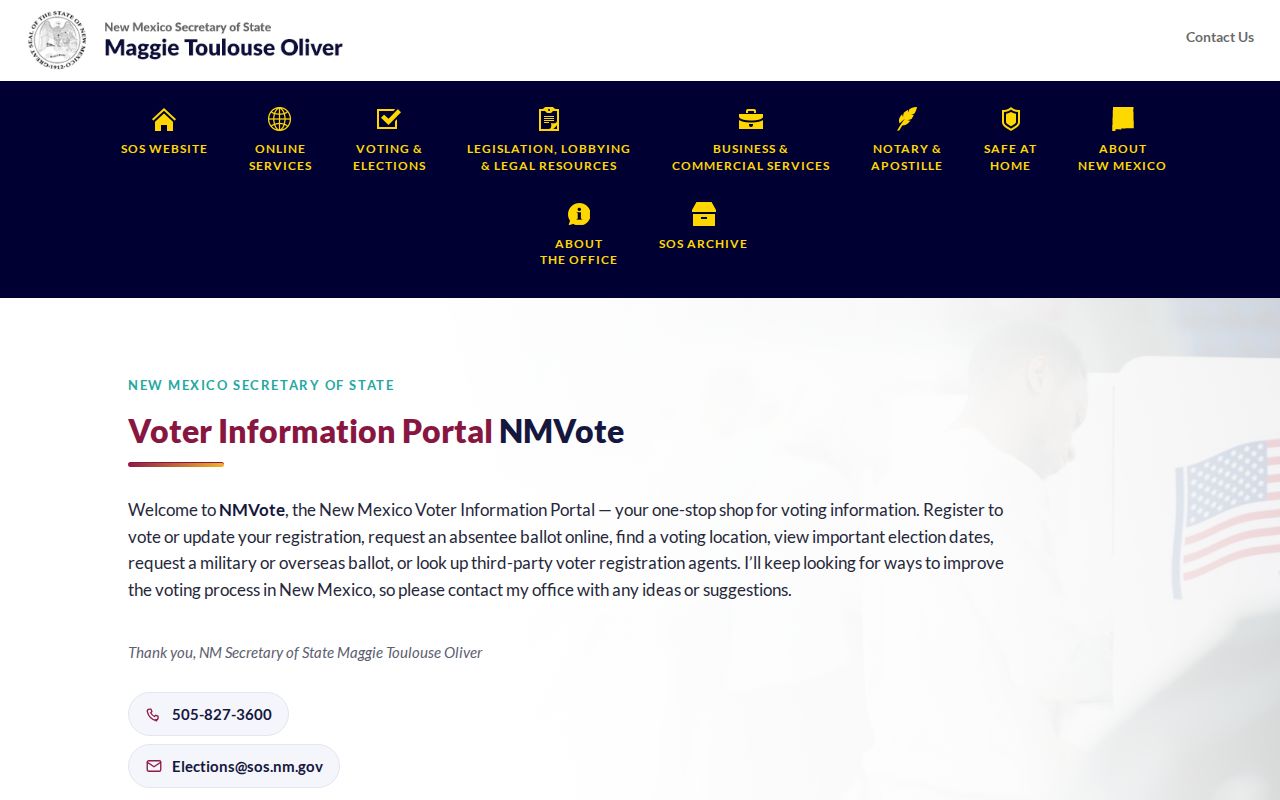
Voting history can show participation and method, never ballot selections. An inactive registration also does not prove a person left an address. These limits keep voter information from becoming a shortcut around the more careful identity checks above.
Santa Fe Resident Lookup Privacy Limits
New Mexico Safe at Home provides a substitute address and mail forwarding for qualifying survivors who have relocated or plan to relocate. Participant voter records are held in a secured module, and the residential or delivery address, phone, and email are not publicly disclosed except by court order. Court records likewise withhold address information and sensitive categories in their public layer. These are safety rules, not dead ends to work around.
For a correction, identify the exact custodian and record reference first, such as a Clerk instrument number, Assessor UPC, or court case number. Ask whether the issue is a factual correction, clerical update, statutory redaction, or a newer linked record. A change in one system does not automatically change a related index. Commercial collection tools may lag or merge people with the same name, so verify a disputed entry with the office that holds the underlying record.
Lawful personal use. Use Santa Fe resident records for lawful personal research, family history, estate questions, or verification with the custodian. New Mexico's Harassment and Stalking Act prohibits using record details to follow, harass, intimidate, or harm another person.