
Santa Fe Historical Directory Volumes
The strongest documented Santa Fe historical directory run is held by the Fray Angélico Chávez History Library. Its official serial list catalogs Santa Fe City Directory for 1928 through 1999 and says the volumes are kept in the reading room. That catalog span is a useful starting point, not a promise that every year is present. Ask staff for the exact volume before visiting. The related Santa Fe Cross Reference Directory appears separately for 1995 and 1997, also in the reading room, and is the rare address-first lead for the later period.
| Santa Fe collection | Known years | Holding location | How it helps |
|---|---|---|---|
| Santa Fe City Directory | Catalogued 1928-1999 | History Museum reading room | Alphabetical resident and business snapshots |
| Hudspeth editions | Examples from 1928-29, 1938, 1940, 1942, 1944, 1947 | Local special collections and cited historical sources | Early publisher evidence |
| Polk editions | Later run, end year disputed | Foundation-cited local collections | Later directory trail |
| Santa Fe Cross Reference Directory | 1995 and 1997 | History Museum reading room | Street and house-number route |
The Historic Santa Fe Foundation house-history article identifies Hudspeth as an early publisher and Polk as a later one. It says the sequence ceased in the 1980s, while the History Library serial list carries a 1928-1999 bibliographic span. Keep both statements in the research notes and confirm the individual issue rather than assuming one undisputed final year.
Note: A published directory is a dated snapshot, not proof of ownership, continuous residence, or every person in a household.
Reading Santa Fe Directory Entries
A Santa Fe directory volume is normally arranged by last name. The source article describes biennial volumes that list residents alphabetically, with home addresses and businesses. An entry may also give a spouse’s name, a place of work, or a telephone number. Those extra details are useful for separating two people with the same surname, but they are not guaranteed in every edition. Copy the spelling and punctuation as printed, then record the book year before comparing it with another source.
| Name entry | Alphabetical surname and given-name form printed in that edition |
|---|---|
| Address | Home address or a business address, depending on the entry |
| Family or work clue | A spouse’s name or place of work when the volume includes it |
| Telephone | Sometimes present, not a universal field |
| Street route | Street name and number in the pink pages when supplied |
Read the first one or two pages of the exact book before interpreting any shorthand. The key belongs to that volume and publisher. It is unsafe to carry a notation from a different year into the entry at hand.
- Cross-reference directory
- An address-first volume that lets a researcher approach a listing through a street and house number. The local serial list names Santa Fe versions for 1995 and 1997.
- Householder index
- A name-oriented listing for the person or household heading printed by that volume. It is not a full census of everyone at an address.
- Abbreviation key
- The explanatory pages near the front of a directory. Photograph or transcribe that key before relying on shortened words or symbols.
Santa Fe Reading Room Access
The Chávez History Library is at 113 Lincoln Ave. It is appointment-only Monday through Friday, 8 a.m. to 5 p.m., and its closed-stack materials are retrieved by staff. Its phone is (505) 476-5090 and its research email is historylibrary@state.nm.us. The library’s serial list, catalog, vertical files, newspaper microfilm list, obituary database, and Fairview locator make it the central local historical stop. For older county and territorial material, the History Library and the state archival research service hold different collections, so a missing directory volume does not end the trail.
The Santa Fe Public Library resources page identifies genealogy material, including Ancestry, as a supplemental route. Confirm current access terms with library staff, because licensed resources can change. Its catalog uses author, title, subject, and keyword approaches, which helps when a printed directory title or a person’s name is known but an item is not full-text searchable.
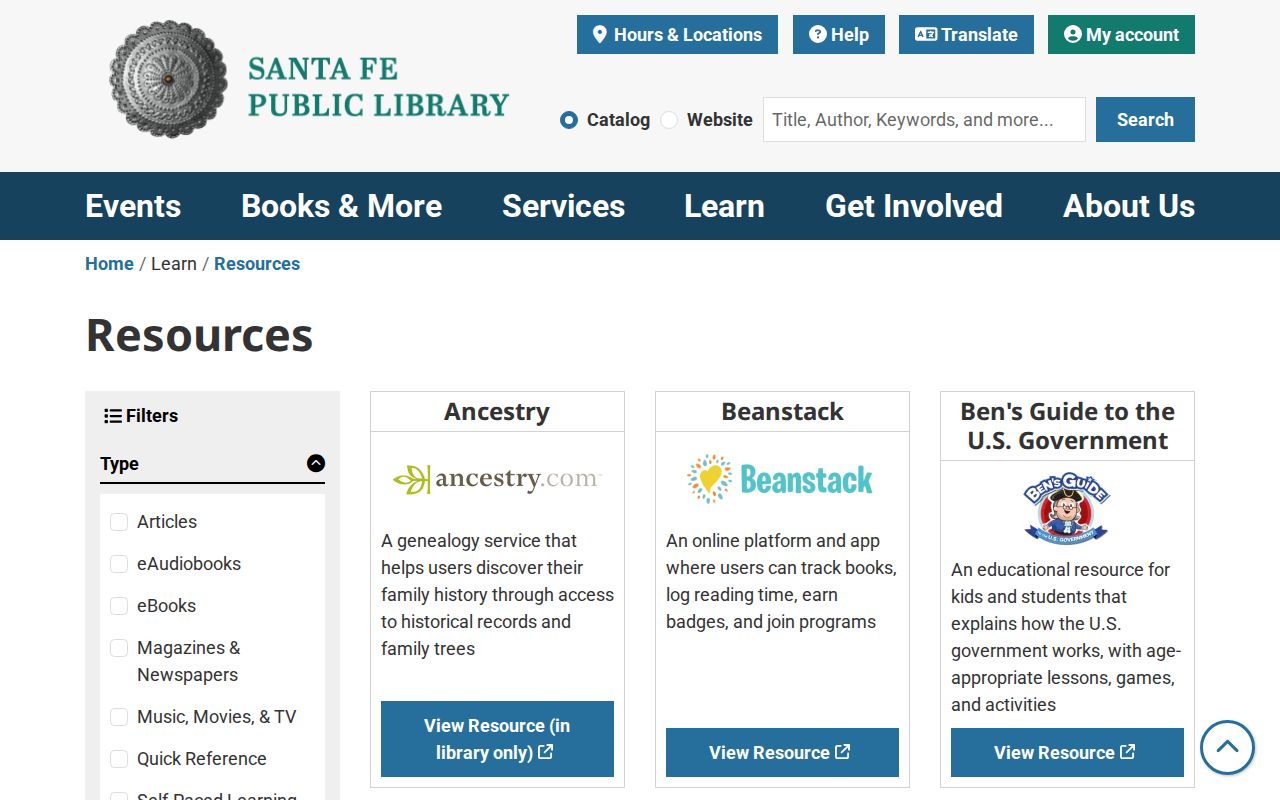
Library research tools can support a directory finding with family material, but the printed volume and its key remain the source for what that edition actually listed.
Santa Fe Directory Pink Pages
Pink pages change the direction of a Santa Fe directory search. Instead of beginning with a surname, use the street name and house number to find the printed address listing, then move back to the alphabetic entry for supporting detail. The local house-history article specifically identifies these street-and-number pages, and the 1995 and 1997 cross-reference volumes provide another address-first route. That makes them practical for family researchers who know a grandparent’s old location but not the exact spelling of a former occupant.
Do not treat an address hit as a deed result. A directory can show a published connection in a particular issue, while property ownership requires the recorded instrument trail. For a current parcel or deed sequence, use the Santa Fe street directory lookup and confirm the property records separately. Note: An address can be renumbered, abbreviated, or printed differently across editions, so keep the original form beside any modern form.
Santa Fe Directory Companions
Directory gaps often yield to newspapers and local service channels. The Santa Fe Public Library Main Library provides free use of a microfilm reader for the Santa Fe New Mexican, plus scanning to USB, interlibrary loan, and public computers with a library card or guest pass. Its service information sets out those practical access options. A notice, obituary, or social item can supply a name form or address clue to test against a nearby directory issue. It remains a contemporaneous lead, not a formal residence certification.
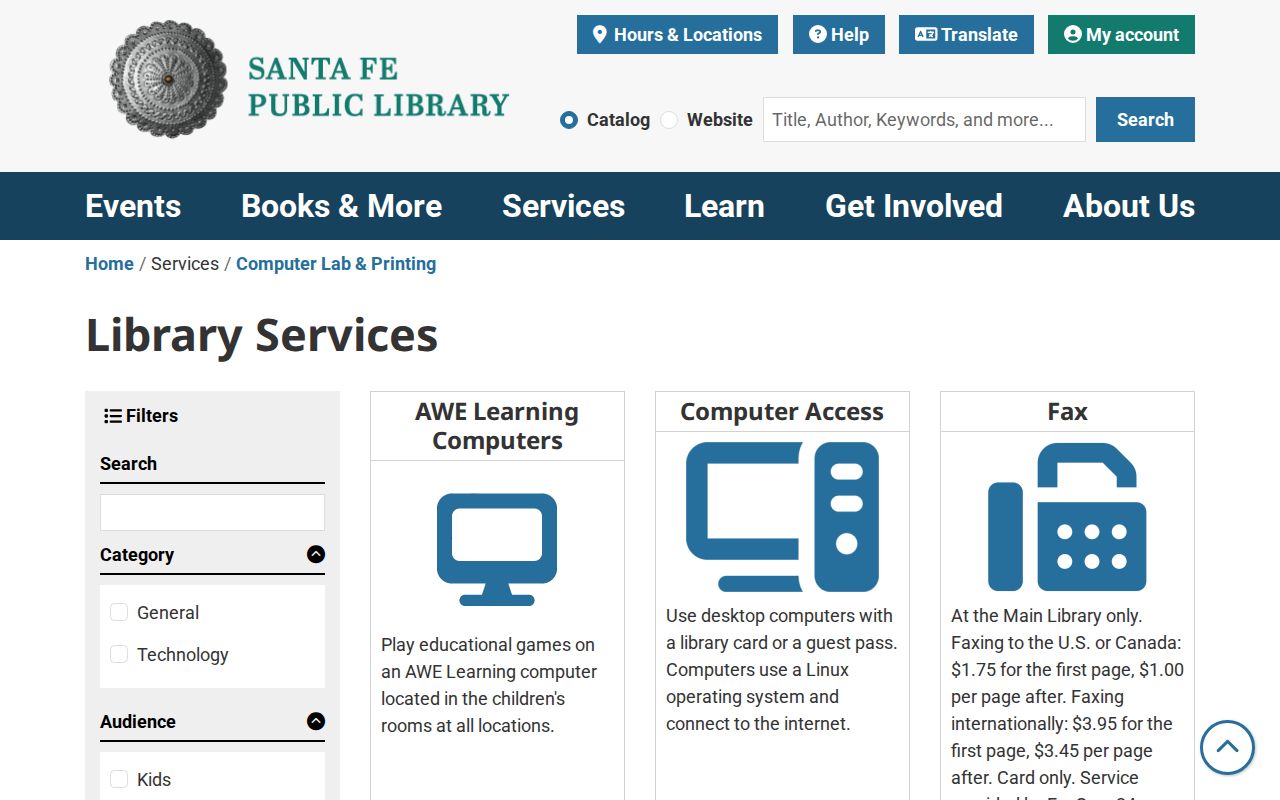
Microfilm is most useful when the directory leaves a gap between editions or when a surname needs a second, dated local reference.
New Mexico Historical Newspapers adds digitized Santa Fe titles: Santa Fe Gazette from 1852 to 1869, Santa Fe Daily New Mexican from 1885 to 1897, Santa Fe New Mexican issues from 1898 to 1913, El Nuevo Mexicano from 1900 to 1922, La Voz del Pueblo from 1891 to 1919, and New Mexico State Record from 1916 to 1921. These titles are especially valuable before the first local directory.
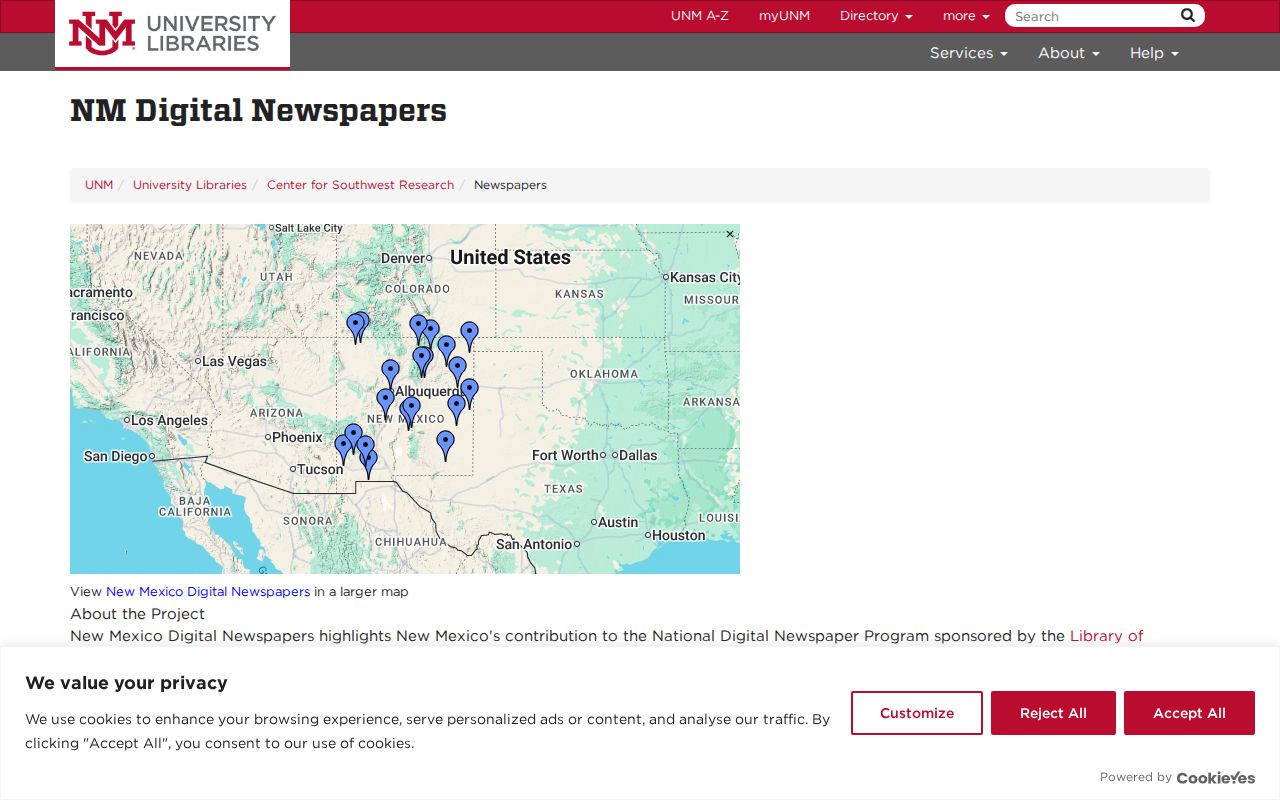
The newspaper collection bridges pre-directory Santa Fe names and provides date-specific context that can be compared with archive and map evidence.
Tracing Santa Fe Directory Households
For family history, follow one name through adjacent directory issues rather than jumping from a single volume to a modern record. A move, a spouse detail, or a changed work listing can distinguish people who otherwise share a name. The process is strongest when each finding is attached to its volume year and then checked against a released census or a dated map. Santa Fe’s historical collections make this a humane way to reconstruct a relative’s local path without treating any one listing as final proof.
- Find the alphabetic entry and save the exact spelling, address, and printed details from that volume.
- Read that volume’s abbreviation pages, then check one edition before and after for a move, absence, or changed listing.
- When the surname is unknown, use pink pages or the 1995 and 1997 cross-reference directories to approach the address.
- Pair the directory year with the nearest released federal census through 1950. The 1890 population schedules were destroyed, so do not expect a normal 1890 household return.
- Use a Sanborn edition, obituary, probate record, or recorded deed to test the address or same-name match.
A disappearance can mean a move, a death, a publication omission, or a different spelling. The Chávez obituary database and probate or deed records can help close the trail, but each still needs a date, address, or family detail to guard against a false match.
Santa Fe Directory Publication Timeline
Santa Fe’s local directory chronology starts much later than the city’s wider archival record trail. This short timeline keeps the volume dates and publisher transition in view when a household search moves across collections. It also explains why the reading-room holdings need a year-by-year check instead of an assumption that every date was printed or survives in the same place.
- 1928: The documented local directory era begins, even though Santa Fe’s archival record trail is much older.
- 1928-1947 examples: Hudspeth editions include the cataloged and cited early issues in the local run.
- Later years: Polk is identified as the later publisher, with the final publication year requiring volume-level confirmation.
- 1995 and 1997: Separate Cross Reference Directory volumes provide an address-first route in the Chávez reading room.
Note: The Chávez serial list’s 1928-1999 catalogued span and the source article’s end-year account should both be retained until the exact volume is confirmed.
Santa Fe Directories Before 1928
Santa Fe directories begin in 1928, though the city’s records extend across Spanish, Mexican, territorial, and statehood institutions. Before that date, shift source families instead of searching for a book that does not exist. The state archival description reports county records for 1850 to 1912, while historical government material has uneven survival. Nearly all Spanish documents in New Mexico were destroyed during the Pueblo Revolt of 1680, and many 1912-1959 government series are discontinuous because agencies once disposed of records before the modern archival program.
For an older location, combine a deed or tax record, church or archival material, a newspaper, and a map. The Library of Congress makes 1886, 1902, and 1921 Santa Fe Sanborn editions available. Begin with each edition’s street index and remember that early sheets chiefly cover the town center. This is a record-geography problem as much as a name problem: irregular older streets and limited map coverage can leave a real place outside a single source’s view.
Santa Fe Directory Name Variants
Santa Fe historical searching crosses Spanish, Mexican, territorial, and later records. Preserve the spelling printed in a directory, then try a surname variation and a version without diacritics only where the particular catalog or index permits it. The local obituary database specifically advises researchers to disregard diacritics. A spouse, address, work detail, or cemetery record is a safer tie-breaker than assuming two similar spellings identify the same person.
The Fairview Cemetery Grave Locator adds more than 2,000 digitized burial records and grave-image context. It can corroborate a family-history lead, but a cemetery result alone does not establish identity, relationship, or a final address. Note: Keep each spelling attempt in the research log so a later match can be checked against the original directory entry.